SEEKING CARE IN NORTH CAROLINA?
North Carolina Justice Center’s Health Resource Guide provides information on finding: low/no cost medical care, health insurance/medicaid enrollment assistance, resources around medical debt, help with hospital financial assistance, obtaining mental health and substance use disorder treatment and more.
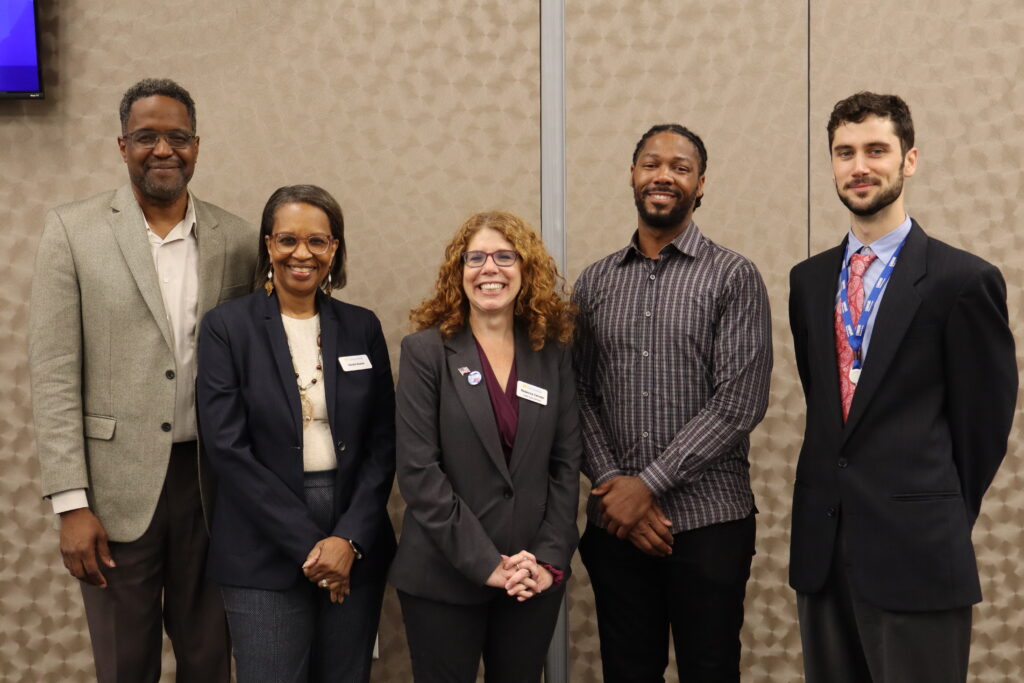
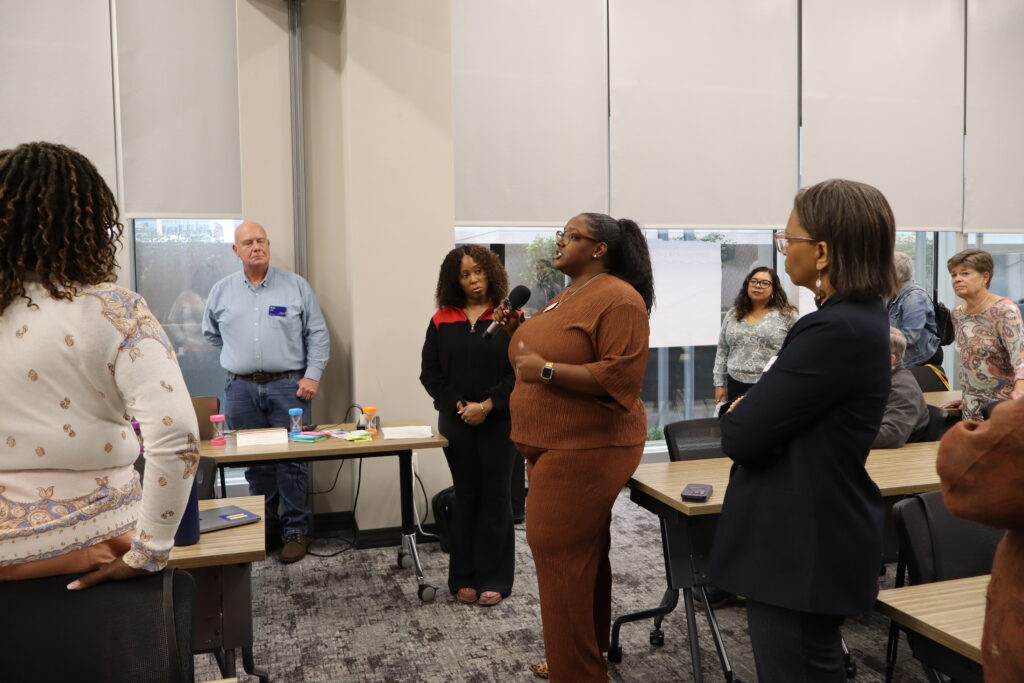
In mid-October, community leaders, healthcare providers, and advocacy groups gathered at the Community Foundation of Greater Greensboro in Greensboro, North Carolina, for a critical conversation about medical debt relief. The Healing without Debt Guilford Stakeholder Summit, led by organizer Dennis White and hosted by Reverend Kenneth Holly of Life in Victory of Christ Ministries Community Development Corporation (LVCMCDC), brought together diverse voices to address a challenge that affects millions of North Carolinians.
A Bold Initiative Takes Shape
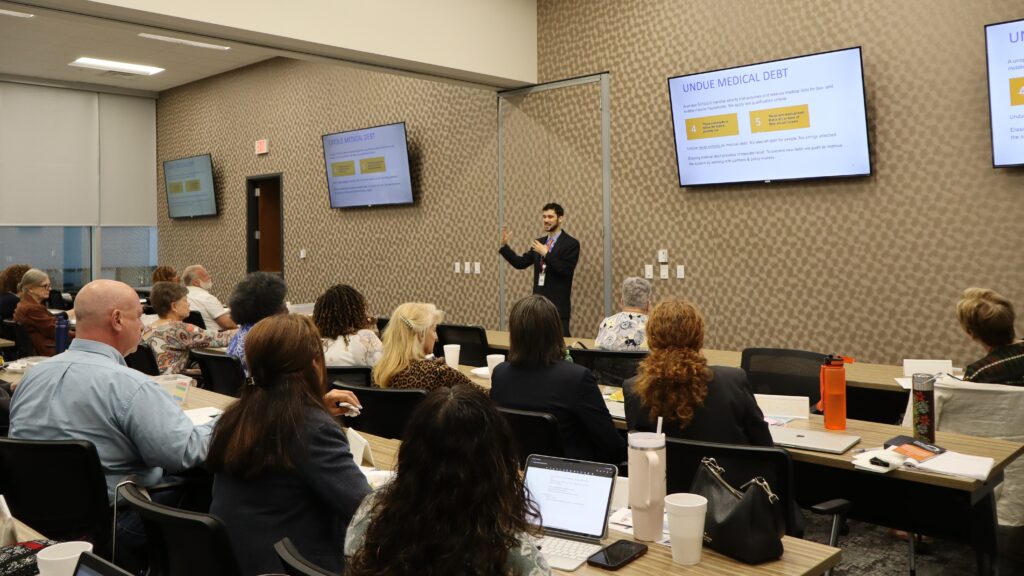
The summit opened with powerful presentations that laid the groundwork for collaboration. Gregory Brodie, Program Manager for Community Engagement at Undue Medical Debt, presented how the medical debt relief model operates in North Carolina through the NC Medical Debt Initiative in partnership with the North Carolina Department of Health and Human Services. The numbers are staggering: $6.5 billion in medical debt is being relieved for 2.5 million people across the state over the next two years.
Rebecca Cerese, Senior Health Policy Advocate at the NC Justice Center, highlighted an urgent concern on the horizon—imminent spikes in health insurance premiums due to expiring subsidies. Finally, the Guilford Community Care Network (GCCN)–a program connecting uninsured adults living in poverty with access to medical care–shared an innovative approach: aligning their intake forms with local hospital Cone Health’s Financial Assistance Application. This makes it easier for patients to access affordable care across systems by streamlining the administrative intake that determines their eligibility for financial assistance. GCCN is also tracking medical debt as a social determinant of health, recognizing that financial burdens directly impact overall well-being.
Three Perspectives, One Goal
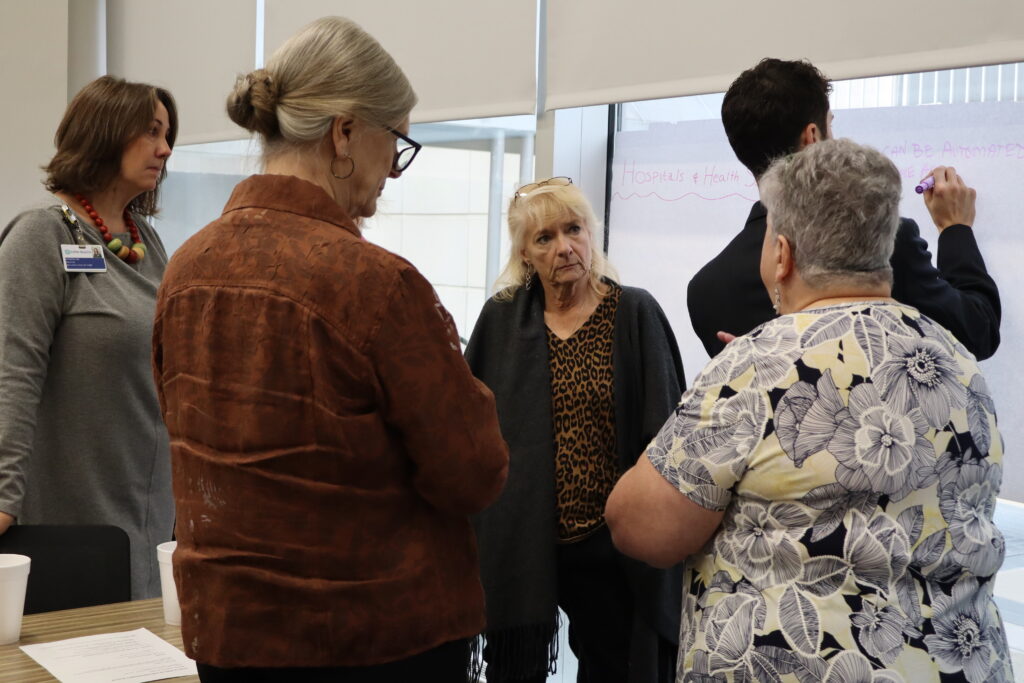
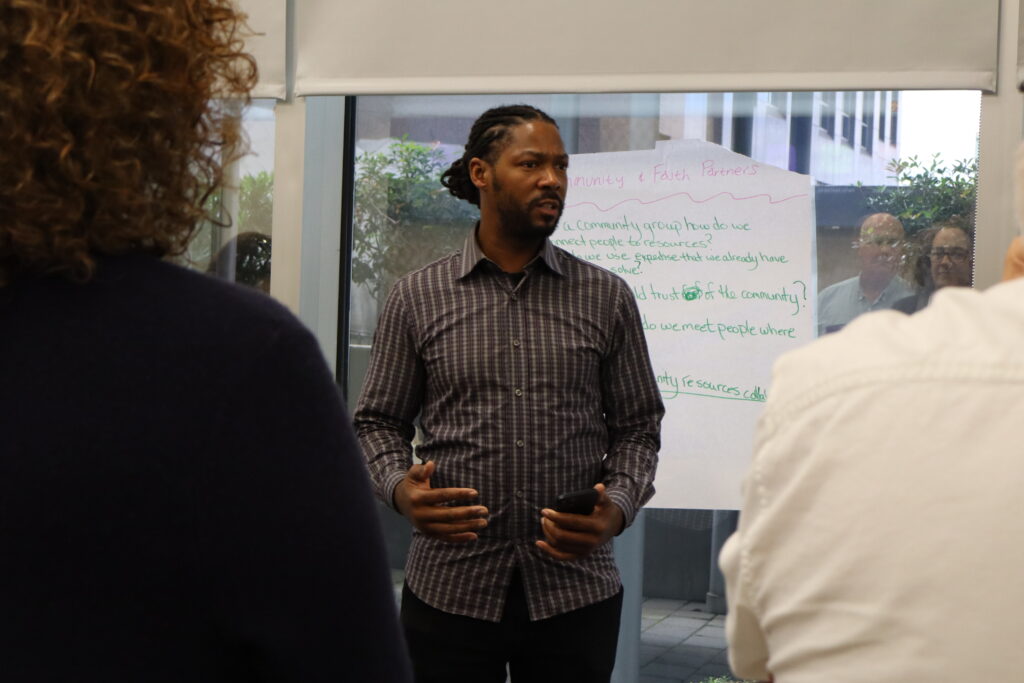
Participants broke into three working groups—Community & Faith Partners, Hospitals & Health Systems, and Policy & Advocacy Leaders—each tackling the challenge from their unique vantage point.
Policy and advocacy leaders looked toward the future, asking the essential question: what happens when the two-year relief program ends? Their recommendations were ambitious—
- develop an accessible financial assistance template;
- institutionalize medical debt relief in law; and
- ensure the program extends beyond hospitals to include clinics, dental offices, and mental health providers
Thirty Days to Make a Difference
The summit concluded with concrete commitments that participants pledged to tackle within the next month. Faith organizations will partner with community groups to host collaborative enrollment events, creating spaces where people can sign up for assistance on the spot. Organizations committed to strengthening outreach and messaging, working together to amplify resources rather than competing for attention.
Perhaps most importantly, the group recognized the power of storytelling. By lifting up local voices and real experiences through social media and community networks, they can show—not just tell—where people can find help.
Two practical tools emerged as immediate priorities: creating a digital toolkit with educational resources accessible via QR code, and streamlining intake processes and financial assistance applications so residents can quickly connect to the right support without navigating a bureaucratic maze.
Building a Movement
Throughout the summit, stakeholders raised pressing questions that revealed both the NC Medical Debt Initiative’s promise and its complexities. These questions provided the blueprint for deeper collaboration. Every conversation circled back to the same critical needs: referral infrastructure, navigation support, and strengthening Community Health Workers who serve as vital bridges between systems and people.
The Healing without Debt Guilford Stakeholder Summit demonstrated that addressing medical debt requires partnership in addition to policy. When community organizations, healthcare systems, and advocacy groups work together, they can transform a daunting challenge into actionable solutions. The groundwork laid at this summit ensures that recipients won’t face confusion or the burden of medical debt alone. Instead, they’ll find a network of trusted partners ready to guide them toward the relief they deserve.
The question now isn’t whether medical debt relief is possible—it’s how quickly and effectively we can bring healing to families who have waited far too long.others will heed the call to end medical debt once and for all.