
The data released by CMS last week on healthcare.gov enrollment signal a reversal of our progress in getting more Americans the health coverage they need. With an initial reduction of over one million lives covered, a complex picture is expected to emerge with more people uninsured and more patients selecting plans that are unaffordable and/or include fewer benefits.
Clearly there is ongoing uncertainty for providers and patients about access to and cost of healthcare. This, of course, perpetuates concerns about affordability that already are heightened and heavy for everyday Americans unable to afford basic needs.
At Undue Medical Debt, we often get asked how these changes from the federal budget bill (also known as H.R. 1) will affect medical debt. The short answer is that it is too early to know. However, as signs point to increases in the uninsured population, financial instability of hospitals and health systems alongside weakened federal consumer protections for medical debt, it is fair to assume that medical debt will rise significantly.1
Our organization is a barometer of these larger policy shifts, especially in how they affect hospitals and health systems — albeit, somewhat delayed. There is some data, however, that can provide early signs of where we are headed. An analysis by Fitch Ratings provides some guidance. The report classifies the credit risk of hospitals into four factors: coverage losses; affordability or loss of federal subsidies for patients; rural hospital exposure and state policy responses or backfilling losses to shield patients.
As a reminder, credit risk matters for hospitals; when risk is high, it reduces health systems’ ability to borrow funds and reduces their profitability. It can also make them vulnerable to mergers and acquisitions, service cuts and closure. Ultimately, this will impact patients, increasing the prevalence of medical debt. The table below highlights states to watch.
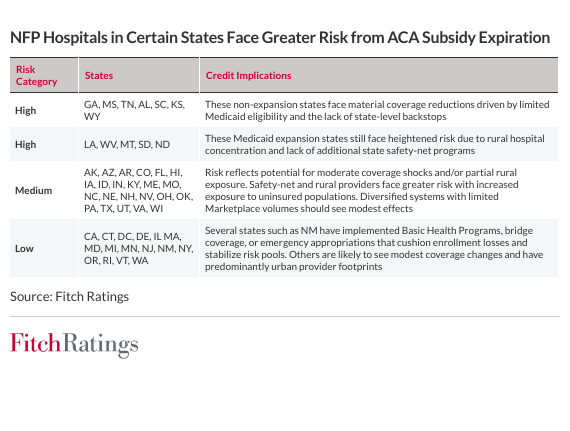
It is important to note that there are various factors at play in these states; as decision makers craft policies and practices to protect patients, the solutions in states may vary based on the market conditions in their states. All stakeholders will need to be nimble and responsive to these diverse pressures. For example, in the high-risk states, rural hospital concentration is one driver while the substantial losses of Marketplace coverage for non-Medicaid expansion states are another.
One finding that will not surprise the health policy world is that health coverage matters. The states that have not expanded Medicaid will face increases in the uninsured while expansion states may provide a pathway for the uninsured through their Medicaid programs and/or other backstops like the Basic Health Plan.
As noted by the report, financial assistance volume is expected to increase later this year once the insurance landscape has settled down. Patients will increasingly need access to financial assistance as they face unaffordable healthcare costs in the form of higher premiums and out-of-pocket costs or opt to go uninsured simply because they cannot afford to carry insurance. The 2026 insurance losses remain a moving data point; we hope to have a clearer data snapshot over the summer.
As hospitals and health systems work to meet this moment, it will be critical for them to be at the table alongside advocates, policymakers, insurers and employers to build a more common-sense healthcare financing system that makes health insurance coverage both affordable and useable. In the meantime, there are key practices that they can pursue—such as making their financial assistance policies and workflow more accessible–including partnering with Undue to abolish medical debt.
- A report released by Third Way in June 2025 estimates that H.R. 1 will lead to $44 billion of medical debt for people over 10 years, increasing the number of people with medical debt by 5 million. http://thirdway.org/memo/gop-health-care-cuts-a-recipe-for-medical-debt-disaster ↩︎